

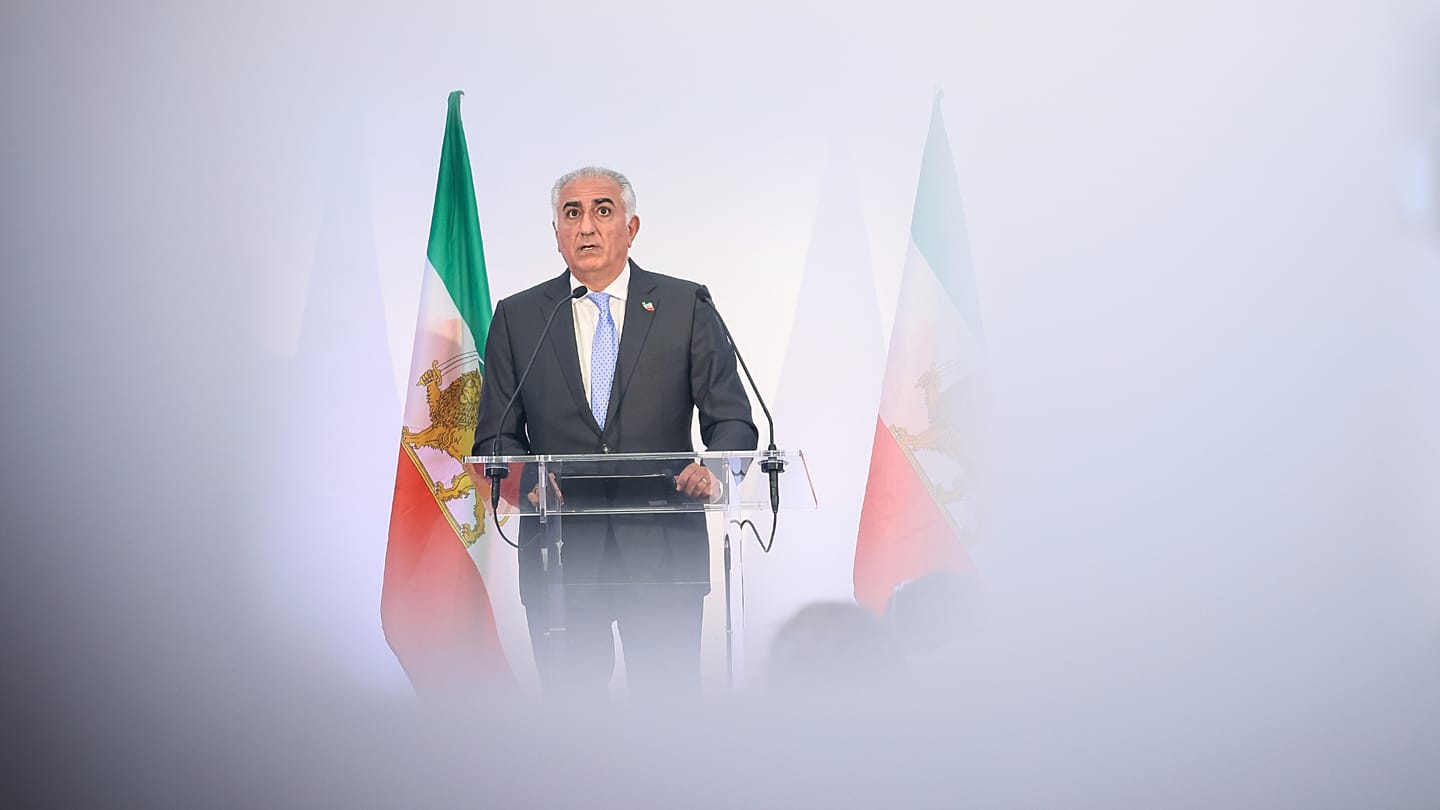
Who Is Reza Pahlavi, the Heir to the Persian Throne, and What Is His Vision for Iran’s Polity?
An in-depth look at Reza Pahlavi, the heir to the Persian throne. Explore his journey from exiled crown prince to a leading opposition figure, and understand his vision for a future secular democratic polity in Iran based on national referendums and peaceful transition.
Protests across Iran escalated dramatically this week, largely fuelled by a call issued by Reza Pahlavi, which was rebroadcast by Farsi-language satellite news channels and websites abroad, urging protestors nationwide to take to the streets.He has been in exile in the United States for nearly 50 years. His father, Iran’s shah, was so widely hated that millions protested in 1979, forcing him from power.From exiled crown prince to leading opposition figure, who exactly is the 65-year-old Reza Pahlavi?Early beginningsBorn in 1960, Reza Pahlavi's birth was a moment of national significance, with reports of crowds lining the streets for kilometers between the hospital and the royal palace to celebrate the arrival of Iran’s heir to the throne.Mohammad Reza Pahlavi, the Shah of Iran, had finally fathered a son who, under the Constitution, was eligible to succeed him as king.Mohammad Reza Pahlavi had previously experienced two unsuccessful marriages—first to Princess Fawzia of Egypt, and later to Soraya Esfandiary. Although he loved Soraya deeply, the absence of an heir led to their separation. He subsequently married Farah Diba, hoping she would bear him a son who would one day inherit the Iranian crown.History and politics, however, took an unexpected turn. In 1978, Crown Prince Reza left his homeland to attend flight school in the United States. A year later, his father fled Iran during the onset of what became known as the Islamic Revolution.Less than a month later, the Iranian Revolution triumphed, the monarchical system collapsed, and the Shah himself died in exile less than two years later.The Death of the Shah and Reza Pahlavi’s OathWith the Shah’s death, responsibility shifted to his eldest son. On his 21st birthday, Reza Pahlavi, who had served as crown prince until that moment, declared his “readiness to accept his responsibilities and commitments as the legal king of Iran".Given the country’s circumstances, he postponed taking the constitutional oath until “divine confirmation would make the conditions possible.” Nonetheless, he swore “by the tricolor flag of Iran and the Quran” to always act as “a factor of national cohesion".Thus began a new chapter in the life of the exiled prince, one that, more than 45 years later, continues to this day.Born on 9 Aban 1339 (October 31, 1960), Reza Pahlavi traveled to Texas at the age of 17, shortly before the Iranian Revolution, to undergo military pilot training. He completed courses qualifying him to fly fighter jets. After the revolution, he began studying political science at the University of Massachusetts but traveled to Cairo during his father’s illness to remain with his family. He later earned his bachelor’s degree through correspondence from the University of Southern California.In a subsequent interview, he stated that during the Iran–Iraq War, motivated by what he described as a “national and patriotic duty,” he sent a letter via the Swiss Embassy in Cairo to the Joint Chiefs of Staff of the Iranian Armed Forces, offering to serve as a fighter pilot. The letter never received a response.Reza Pahlavi and his Role as a Prominent Opposition FigureFollowing the death of the last Shah of Iran, Reza Pahlavi emerged as the most prominent opposition figure among monarchists. He later stated that he had established a government-in-exile.Although his presence on the political stage was limited for many years, Reza Pahlavi never withdrew entirely from political activity. Despite consistent calls from monarchists for his return to Iran and the restoration of the throne, he repeatedly emphasised that he does not necessarily seek the reestablishment of monarchy. Instead, Reza Pahlavi said his goal is the overthrow of the ruling regime, followed by a referendum in which Iranians can freely determine their future political system. This stance alienated both traditional and radical monarchists and led to divisions within his support base.A Symbol of the Pre–Islamic Republic Era, and a 'No to the Status Quo'Despite these tensions, several factors have strengthened Reza Pahlavi’s position among a population largely born after the Shah’s era.Reza Pahlavi has become a symbol of the pre–Islamic Republic political order and is widely recognised as the most prominent opponent of the current regime.The ruling system's failure to deliver sustained economic and social progress, combined with media narratives highlighting the perceived achievements of the monarchical era, has prompted comparisons between Iran’s economic performance and international standing under the Shah and under the Islamic Republic. These comparisons have, in turn, generated more favorable views of the former Shah’s son.A Leadership Vacuum in the OppositionAt the same time, no other individual or group abroad has succeeded in establishing itself as a credible alternative opposition force. The most organised opposition group outside Iran remains the Mojahedin-e Khalq Organisation, which for various reasons has become the target of widespread public anger.The group maintains a religious ideology, requires Islamic hijab for its female members, and collaborated with Saddam Hussein during Iraq’s military assault on Iran—factors that have effectively denied it legitimacy among the broader population.Other individuals and groups have emerged briefly and influenced segments of society, but overall they have failed to gain majority support as a viable alternative to the Islamic Republic’s ruling system. For example, following the “Woman, Life, Freedom” movement in September 2022, an alliance for “Alliance for Democracy and Freedom in Iran” was formed, bringing together prominent opposition figures and various political currents, including Reza Pahlavi. The coalition soon collapsed due to internal disagreements.Despite these setbacks, Reza Pahlavi’s calls for demonstrations against the Islamic Republic have been met with widespread public support. Slogans heard from within Iran have frequently centered on support for his return to the country.What Does Reza Pahlavi Say About Iran’s Future Political System and His Own Role?According to his public statements and messages, Reza Pahlavi does not seek a return to an “absolute monarchy” or hereditary rule. Instead, he advocates a transition from the current system to what he describes as “a people-based system of governance grounded in the free choice of the people.” While acknowledging that his family history is closely tied to monarchy, he emphasises that he personally does not seek power or an official political position, nor does he wish to reclaim a specific title. His stated aim is to ensure that Iranians can freely determine the nature of their future political order.He argues that any future system must be formed through free elections, based on the will and vote of the people, grounded in human rights, and founded on the separation of religion and politics.In outlining the process of political change, Reza Pahlavi emphasises several key principles. He calls for a peaceful transition, insisting that change should occur without violence or through civil disobedience. He has also expressed support for the armed forces, including the army and the rank and file of the Revolutionary Guard, urging them to side with the people. Finally, he maintains that the form of the next political system, whether a parliamentary monarchy or a republic, must be determined through a free referendum. He has repeatedly stated that he considers a secular democratic system to be the most suitable political model for Iran.Today, despite divergent views regarding Iran’s future political system, it appears that many protesters have coalesced around Reza Pahlavi as a leading figure of the opposition to the Islamic Republic, postponing decisions about the form of governance until after the collapse of the current regime.